Busy weeknight and dreading the dishes? The best sheet pan dinner recipes follow one pattern: oil-tossed vegetables, a protein, high heat, and a thermometer check. Line the pan, stagger the timing, and cleanup takes minutes.
New to cooking? This is one of our picks among easy recipes for beginners, so every step is spelled out.
| Item | Value |
|---|---|
| Chicken and other poultry, safe minimum | 165°F (74°C) |
| Pork steaks, roasts and chops, safe minimum | 145°F (63°C), plus 3 minutes rest |
| Ground meat and sausage, safe minimum | 160°F (71°C) |
| Fish fillets, safe minimum | 145°F (63°C) |
| Oven temperature in the timing chart | 400°F (204°C) |
| Potatoes on the pan | 25 – 35 minutes |
Figures come from the University of Maine Extension’s March 1, 2024 food-safety post and the ThermoWorks sheet-pan chicken guide. They can change, so check the source before you rely on them.
What makes a sheet pan dinner work
A sheet pan dinner is a bed of oil-tossed vegetables with a seasoned protein nestled in, all roasted on one rimmed baking sheet. As ThermoWorks puts it, sheet pan cooking creates very few dishes, and roasting browns the vegetables and the meat instead of simmering them together.
The catch is that foods cook at different speeds. Pair chicken with asparagus and you can end up with limp asparagus or underdone chicken, which is why timing matters more than the recipe itself.
Three habits solve nearly every problem:
- Cut vegetables into similar-size chunks so they finish together.
- Add quick-cooking items late and slow ones early.
- Judge the meat by temperature, not by the clock.
When should each vegetable go on the pan?
ThermoWorks shares a chart adapted from the New York Times cooking site. It gives approximate times at 400°F (204°C) for vegetable chunks, and a few examples are listed below, as the ThermoWorks guide reports them:
- Asparagus, whole: 8 – 15 minutes, depending on thickness
- Broccoli: 10 – 15 minutes
- Brussels sprouts, halved: 20 – 30 minutes
- Potatoes: 25 – 35 minutes
- Sweet potatoes: 30 – 40 minutes
Use the chart to decide the order, not to declare anything done. If you are roasting boneless thighs with sweet potatoes, ThermoWorks suggests a 5-minute head start for the potatoes. For broccoli with bone-in chicken breasts, hold the broccoli until the meat has been in for about 20 minutes.
Safe internal temperatures to check
You cannot judge doneness by sight. Cornell Cooperative Extension (page last updated October 7, 2024) says to use a food thermometer, because meat can look done before it is.
The chart below follows FoodSafety.gov as reproduced in the University of Maine Extension’s March 1, 2024 post. These are the minimums for the usual sheet pan proteins:
- Chicken and other poultry: 165°F (74°C)
- Pork steaks, roasts and chops: 145°F (63°C), then rest for 3 minutes
- Ground meat and sausage: 160°F (71°C)
- Fish: 145°F (63°C), or until the flesh is no longer translucent and flakes easily with a fork
Insert the thermometer into the center of the thickest part. The same University of Maine post advises checking in 2 – 3 places, since the center is the last spot to heat up.
Resting counts too. Food keeps gaining heat after it leaves the oven, and that heat spreads evenly through the piece.
Dark meat has one extra rule. ThermoWorks says thighs are safe at lower readings but are not as enjoyable until they reach at least 165°F (74°C), because the collagen needs more heat to break down. Their guide goes into the detail if you are curious.
Lining the pan and other ways to cut cleanup
The easiest win is a lined pan. ThermoWorks reminds cooks to line the pan with foil, so that scraping and soaking mostly disappear.
A few more habits keep the sink nearly empty:
- Toss the vegetables with oil and seasoning right on the pan, not in a bowl.
- Give the protein a little space, so pieces roast instead of steaming.
- Use a single thermometer and wash it afterward in hot, soapy water, as the University of Maine Extension recommends.
A calibrated instant-read thermometer is the one tool worth owning here, and everything else is already in your kitchen. This guide has no affiliate links, and every recipe works without buying anything.
Three pan combinations to try
Use these as templates and swap in what you have. Each pairs a protein with a vegetable that finishes on a similar schedule.
- Chicken thighs and sweet potatoes: start the potatoes first, add the thighs, and pull the chicken only once it reads 165°F (74°C).
- Pork sausage, potatoes and broccoli: roast the potatoes alone for a while, then add the sausage, and tuck the broccoli in last. Check the sausage for 160°F (71°C).
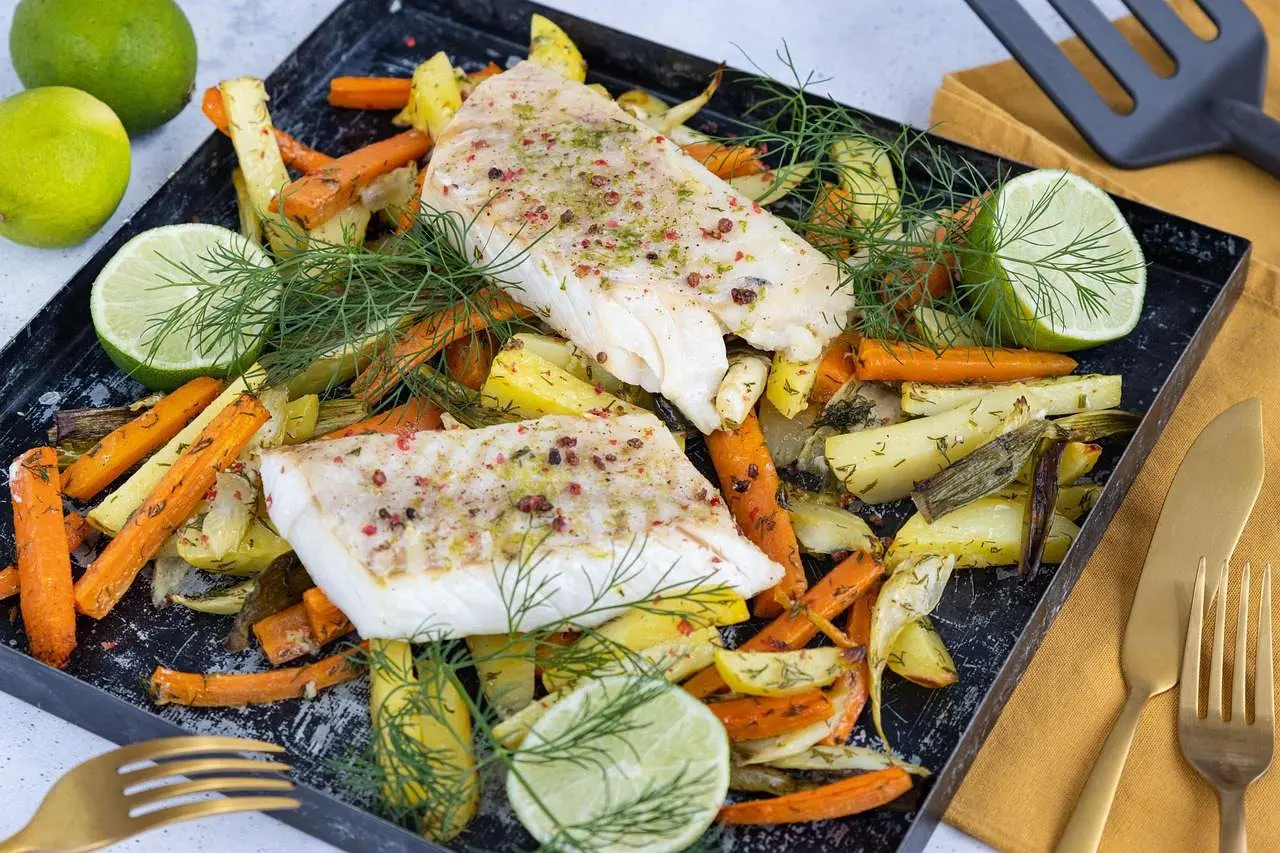
- Fish and asparagus: both cook fast, so keep the pan hot and watch the fish for 145°F (63°C). For shrimp, cook until the flesh is pearly or white, and opaque.
If a pan of pizza sounds better than a pan of chicken, start with our homemade pizza dough recipe. On nights when you would rather use a pot, our soup recipes are the next stop.
Frequently asked questions
Can everything go on the pan at the same time?
Show answer
Only when the pieces cook at a similar pace. Otherwise, start the slow ingredients first and add delicate ones later, and let a thermometer reading decide when the meat is ready.
Is pink pork unsafe?
Show answer
Not necessarily. Cornell Cooperative Extension notes that cooked, uncured red meats, pork included, can stay pink even after reaching a safe internal temperature, so rely on the thermometer.
How do I know shrimp is done without a thermometer?
Show answer
Watch the color. The University of Maine Extension chart says shrimp, lobster, crab and scallops are ready when the flesh turns pearly or white, and opaque.
How hot should leftovers get when I reheat them?
Show answer
The same chart lists any type of leftovers at 165°F (74°C) according to the University of Maine Extension’s March 1, 2024 post. Warm them on the pan and check the center before serving.