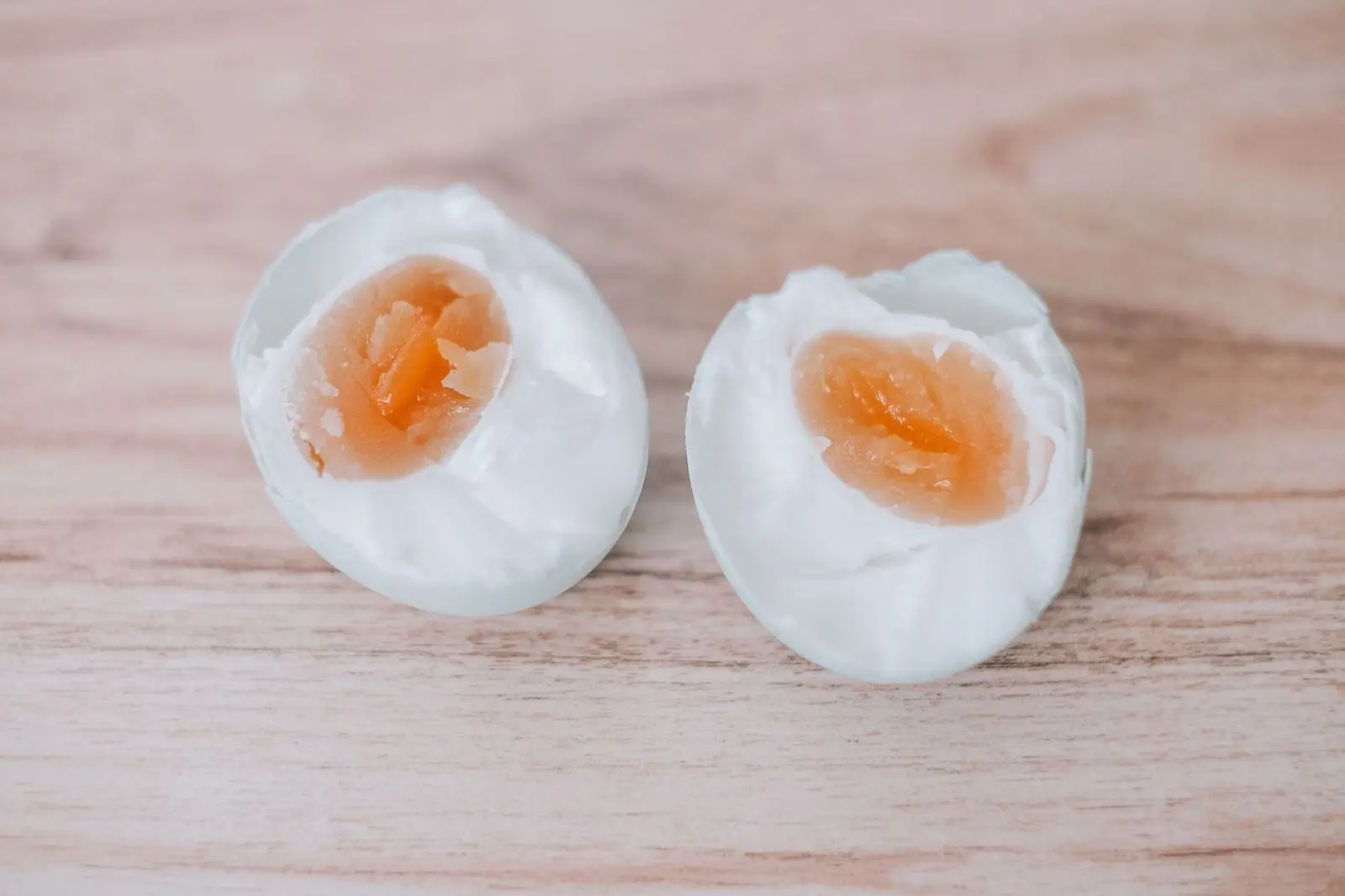
Worried your yolks will come out chalky or runny by accident? Here’s how to boil eggs: lower them into boiling water, time them from 6 to 12 minutes, then chill them in ice water.
This guide sits inside our collection of cooking tips for beginners.
| Item | Value |
|---|---|
| Cooking time range | 6 to 12 minutes |
| Water over the eggs | at least 1 inch |
| Ice bath | 10 minutes |
| Refrigerate boiled eggs within | 2 hours |
| Hard-boiled eggs in the fridge | up to 1 week |
| Soft-boiled eggs in the fridge | up to 2 days |
These figures come from Natasha’s Kitchen boiled egg guide, which tested large eggs. Figures can change, so check the source before you rely on them.
What you need before you start
You need a saucepan, a slotted spoon, a timer and a bowl for chilling, and nothing here requires a purchase. A 3-quart saucepan easily fits 8 large eggs, according to Natasha’s Kitchen.
- Eggs: use large eggs straight from the fridge. RecipeTin Eats treats fridge-cold eggs as insurance for creamy yolks.
- Pan: choose one that holds the eggs in a single layer, because crowded eggs take longer to cook, as RecipeTin Eats warns.
- Tools: a slotted spoon or skimmer for lowering and lifting the eggs, plus a timer.
- Ice bath: a large bowl of cold water with ice, ready before the timer ends.
Egg size changes the timing. The chart below was tested with large eggs, and larger eggs take longer while smaller ones cook faster, per Natasha’s Kitchen.
How to boil eggs step by step
This is the boiling-water method, which two of the three recipes we checked recommend. Follow the steps in order and set the timer the moment the last egg goes in.
- Fill the pan with enough water to cover the eggs by at least 1 inch, then bring it to a rolling boil over high heat with the lid off, as Natasha’s Kitchen directs.
- Use a slotted spoon or skimmer to lower the cold eggs in gently so they don’t crack.
- Turn the heat down so the water keeps a steady, gentle boil and the eggs don’t bounce around.
- Start the timer as soon as the eggs enter the water and cook for 6 to 12 minutes, depending on the yolk you want (see Natasha’s Kitchen).
- While the eggs cook, fill a bowl with ice water.
- When the timer ends, move the eggs into the ice bath and leave them for 10 minutes before peeling or storing, per Natasha’s Kitchen.
A gentle boil matters more than a fierce one. Natasha’s Kitchen advises a steady boil rather than a hard, rolling boil once the eggs are in.
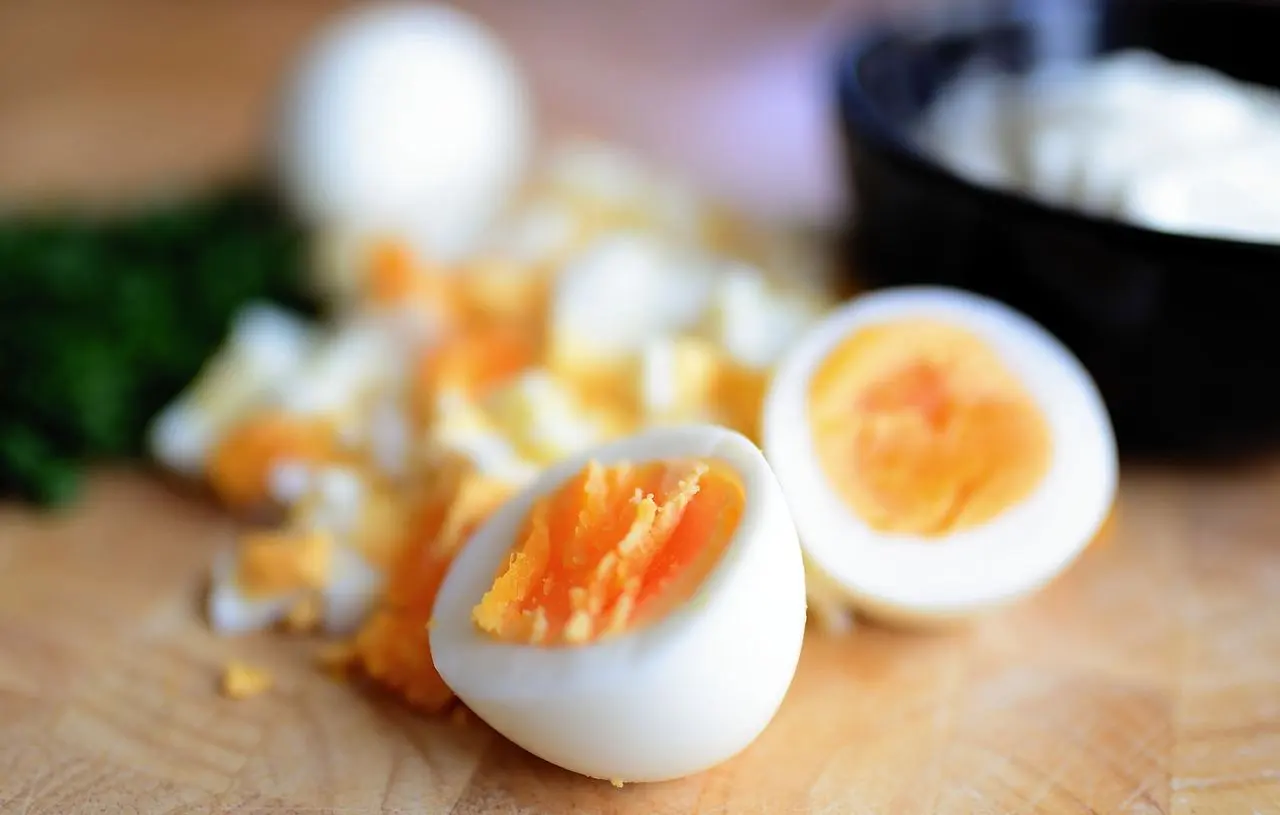
Boiled egg timing chart
Pick your time from the chart, counting from the moment the eggs enter boiling water.
| Time | Result | Best for |
|---|---|---|
| 6 minutes | Runny yolk, soft-set whites | Egg cup with toasted bread for dipping |
| 7 minutes | Jammy yolk, set whites | Ramen, grain bowls or toast |
| 8 minutes | Medium-boiled, moist but softly set yolk | A quick high-protein snack |
| 10 minutes | Tender hard-boiled egg | Mashing into egg salad or potato salad |
| 12 minutes | Firm, fully set yolk | Clean slices on Cobb salad, deviled eggs or avocado toast |
The timings and uses are from Natasha’s Kitchen, which also warns that cooking past 12 minutes raises the chance of a green ring around the yolk. Times can vary with your stove and pan, so check the source if your results differ.
Bigger eggs need a little extra time. RecipeTin Eats adds 30 seconds for extra-large eggs and 1 minute for jumbo, while Pillsbury suggests about one minute more for extra-large.
Pillsbury describes its own spectrum as a guide, not a hard-and-fast rulebook. Treat any time as a starting point and tweak it on your next batch.
Should you start with hot or cold water?
The sources disagree, and both approaches work. Natasha’s Kitchen found that lowering cold eggs into boiling water gave the most consistent timing and eggs that were significantly easier to peel.
RecipeTin Eats agrees that a cold-water start adds too many variables. Pillsbury tested both and called the cold-water method the clear winner, with a full boil followed by turning off the heat and covering the pot.
If you use Pillsbury’s off-heat approach, follow its own timing chart instead of the one above. Mixing the two methods is the quickest way to end up with the wrong yolk.
How do you peel boiled eggs without tearing them?
Start with a proper chill. Pillsbury says eggs are easiest to peel right out of the ice bath, and the 10-minute chill from Natasha’s Kitchen helps the shells release.
- Crack at the wide end. Natasha’s Kitchen says to crack firmly where the air pocket sits, then peel from that end to get under the membrane (source).
- Peel under water. Running water, or a bowl of it, helps the shell slip off; RecipeTin Eats peels from the base while submerged.
- Tap and roll. Pillsbury taps one end gently on a hard surface, then rolls the egg to shatter more of the shell (source).
Soft-boiled eggs need a much gentler touch, per Pillsbury. Freshness also plays a part: Natasha’s Kitchen notes that older store-bought eggs are easier to peel.
Storing boiled eggs
Put eggs in the fridge within 2 hours of cooking, advises Natasha’s Kitchen. Keeping them unpeeled protects them from drying out and picking up odors.
- Hard-boiled eggs keep up to 1 week according to Natasha’s Kitchen, but Pillsbury says up to four days in the shell, so go with the shorter window if you’re unsure.
- Soft-boiled eggs are best fresh and last up to 2 days in an airtight container, per Natasha’s Kitchen.
Once the eggs are chilling, you can put the same pot-and-timer habits to work on other basics. Our guide on how to cook rice pairs well with a jammy egg, and how to cook chicken breast covers a protein-rich main for the same plate.
Frequently asked questions
Do I need to add salt or vinegar to the water?
Show answer
No. Pillsbury says nothing needs to go in the water, and Natasha’s Kitchen calls both additions optional, noting vinegar may help if a shell cracks and salt can limit how much white leaks out. For easy peeling, the boiling-water start and the ice bath do most of the work (source).
Is a soft-boiled egg safe to eat?
Show answer
Pillsbury’s guide carries a disclaimer: to lower the risk of illness from bacteria, food safety experts recommend cooking eggs until the yolks are firm. If you want a softer yolk, it suggests using pasteurized eggs (source).
Can I freeze or reheat boiled eggs?
Show answer
Freezing whole hard-boiled eggs is a poor idea, since the whites turn rubbery, though the yolks can be frozen on their own. A soft-boiled egg should not be reheated in the microwave; a quick dip in boiling water is the safer route (source).
Why do my eggs crack in the pot?
Show answer
Water that churns too hard is the usual cause, so ease the heat until the surface bubbles steadily. RecipeTin Eats adds that thin shells and invisible hairline fractures can also be to blame (source).