Halfway through a recipe and the units don’t match your measuring cups? Use this cooking measurement conversion chart: it turns cups, ounces and spoons into milliliters and grams, so you can cook any recipe with confidence.
This guide is part of our look at cooking methods explained, where accurate measuring is the foundation of every recipe.
| Measure | Equivalent |
|---|---|
| 1 teaspoon | 5 mL |
| 1 tablespoon | 15 mL |
| 1 cup | 240 mL |
| 1 ounce (by weight) | 28 g |
| 1 pound | 454 g |
These figures come from NIST’s cooking measurement equivalencies, which are approximate and can change, so check the source before you rely on them.
Spoons and cups in milliliters
Most American recipes call for spoons and cups, while much of the world cooks in milliliters. NIST publishes approximate equivalents, so treat each value as a dependable working figure rather than a laboratory reading.
| US measure | Metric |
|---|---|
| 1/4 teaspoon | 1.25 mL |
| 1/2 teaspoon | 2.5 mL |
| 1 teaspoon | 5 mL |
| 1 tablespoon | 15 mL |
| 1/4 cup | 60 mL |
| 1/3 cup | 80 mL |
| 1/2 cup | 120 mL |
| 6 fluid ounces | 180 mL |
| 1 cup | 240 mL |
The values above are taken from NIST’s Metric Kitchen table, so check that page if you need the latest version.
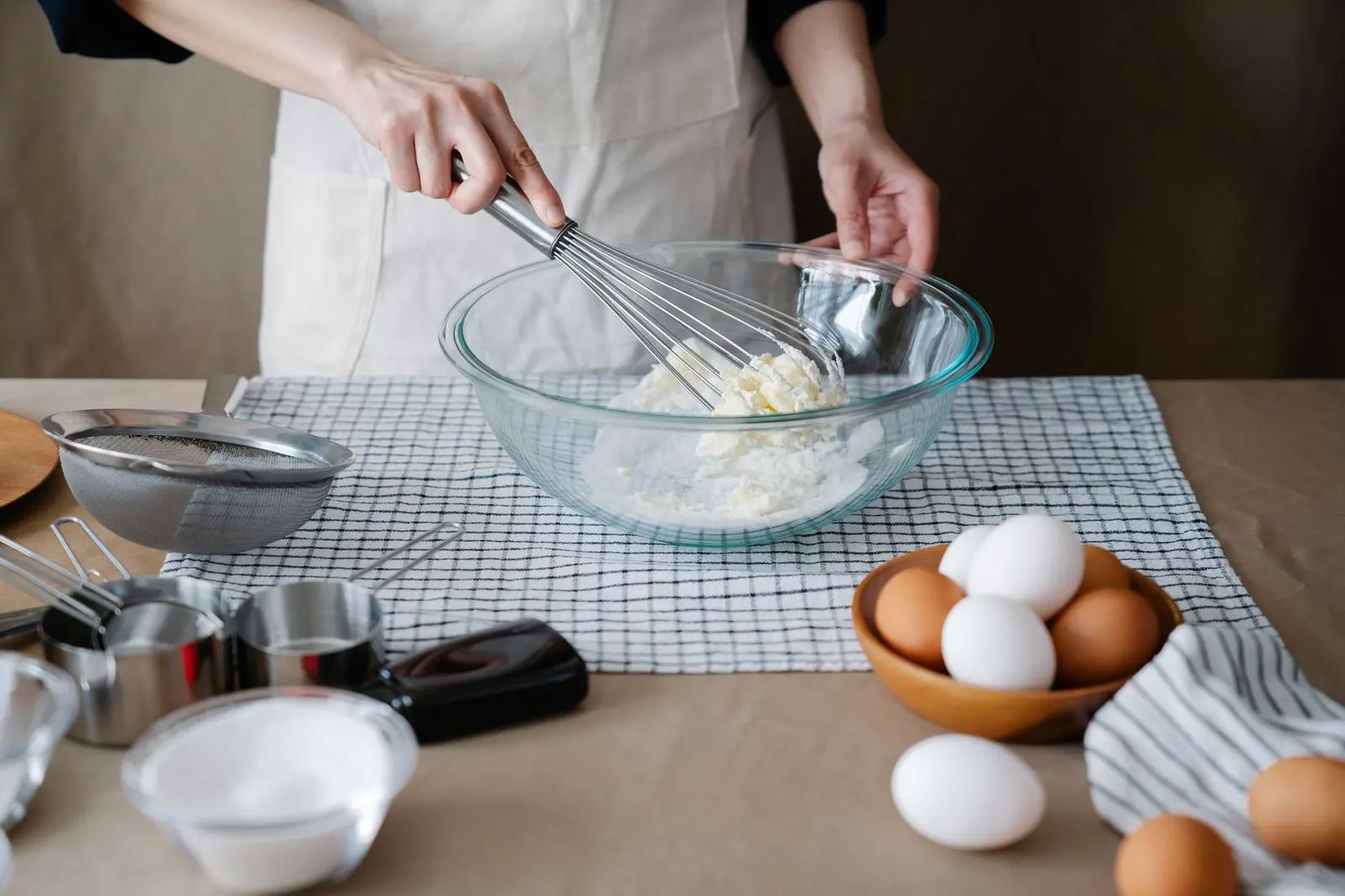
Spoons stack up into cups in a predictable way. USDA’s tables put 1 tablespoon at 3 teaspoons, 1/4 cup at 4 tablespoons and 1/2 cup at 8 tablespoons. An awkward amount such as 1/3 cup works out to 5 tablespoons plus 1 teaspoon, as listed in USDA’s measurement conversion tables.
Fluid ounces, pints, quarts and gallons
Liquid measures build on one another. USDA lists 8 fluid ounces as 1 cup, 1 pint as 2 cups, 1 quart as 4 cups and 1 gallon as 4 quarts, as shown in its measure equivalents.
| US measure | Metric |
|---|---|
| 1 fluid ounce | 30 mL |
| 1 pint (16 fluid ounces) | 480 mL |
| 1 quart (32 fluid ounces) | 950 mL |
| 1/2 gallon | 1.95 L |
| 1 gallon | 3.84 L |
The metric values are NIST’s approximations from its cooking measurement equivalencies.
Watch for one classic trap: a fluid ounce measures volume, while the ounce on a scale measures weight. NIST points out that US customary units include both the fluid ounce (fl oz) and the avoirdupois ounce (oz), as explained in its culinary measurement tips.
Ounces, pounds and grams
Weight conversions are where a chart earns its keep, because grams let you follow a recipe written anywhere.
| Weight | Metric or pounds |
|---|---|
| 1 ounce (by weight) | 28 g |
| 4 ounces (1/4 pound) | 114 g |
| 16 ounces (1 pound) | 454 g |
| 1 kg (1000 g) | 2.2 pounds |
NIST marks these as approximate in its equivalencies table.
When a recipe needs finer precision, USDA’s conversion factors use 28.35 grams for a dry ounce and 453.6 grams for a pound, according to its conversion tables. For everyday cooking, the rounded figures above are close enough.
Why a scale beats measuring cups
NIST calls weighing ingredients on a kitchen scale a best practice for recipe accuracy, preferred over measuring by volume in fluid or dry cups, in its culinary measurement tips. The same page warns that using a dry cup where a liquid cup belongs is a common way to introduce errors.
If you do use cups, a few habits keep them honest:
- Set a fluid measuring cup on a level surface.
- Read the liquid’s curved surface (the meniscus) at eye level.
- Strike off the excess when filling a dry measuring cup.
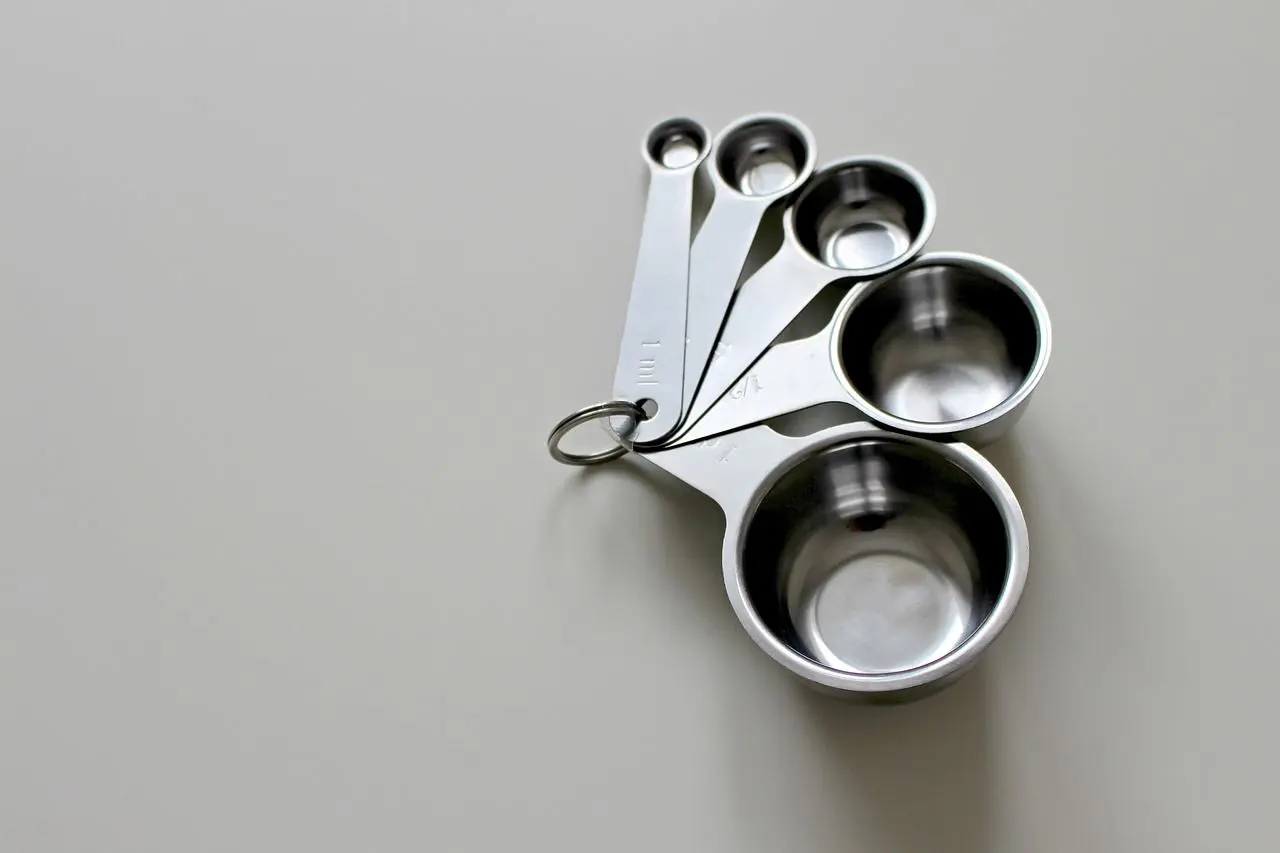
You don’t need to buy anything special to start: a basic cup and spoon set works with every chart on this page. If you are still building your toolkit, our guide to kitchen essentials for beginners explains which measuring tools are worth owning first.
How do you convert an American recipe to grams?
NIST describes the safest method for a traditional American recipe: measure the ingredient with a traditional tool, then weigh the result in grams. That approach is laid out in its measurement tips.
- Measure the ingredient exactly as the recipe says, using your usual cups and spoons.
- Tip it onto a kitchen scale set to grams and note the reading.
- Write that weight beside the original amount, so next time you can skip the cups.
An online cooking calculator or smartphone app can also convert pounds to grams, gallons to liters and Fahrenheit to Celsius, according to the same NIST page.
Check your thermometer too
Temperature is the other half of an accurate recipe. NIST suggests testing a cooking thermometer in boiling water, which reads 100 °C at sea level, then adjusting your readings by any difference you find, as described in its guidance. Once your thermometer reads true, our guide to cooking oil smoke points helps you match the right oil to the heat.
Frequently asked questions
How many tablespoons are in a cup?
Show answer
USDA’s table puts 1 cup at 16 tablespoons, so if your cup is missing you can count out spoonfuls instead, as listed in its measure equivalents.
Are cups and spoons the same in every country?
Show answer
No. NIST warns that teaspoons, cups, pints, quarts and gallons can mean different things from one country to another, so a recipe from abroad may not match your American set. It adds that some historic metric cup and spoon measures are slightly larger than the US ones, as noted in its measurement tips.
Does a cup of flour weigh the same as a cup of sugar?
Show answer
Not usually, because density differs from one ingredient to the next. NIST SP 430, Household Weights and Measures, gives approximate weights for several home-cooking commodities, and NIST discusses density on its culinary measurement tips page.
Do I need to change measurements at high altitude?
Show answer
Yes, some recipes need changes. NIST says adjustments are needed for baking, canning, pressure cooking and candy making at high altitudes, and it suggests consulting online resources, as stated in its tips page.