Setting up your first kitchen can feel like a shopping list with no end, but kitchen essentials for beginners come down to a few pots, three knives and some simple utensils. You can start with far less than a store suggests.
This guide is part of our look at cooking methods explained, so use it to match your tools to the way you cook.
| Item | Starter size |
|---|---|
| Large pot | 8-quart pot with lid |
| Small saucepan | 2-quart saucepan with lid |
| Large nonstick skillet | 12-inch skillet |
| Chef’s knife | 8 or 10-inch blade |
| Cutting boards | 3 different cutting boards |
These sizes come from the American Heart Association’s equipment guide and the University of Maine Cooperative Extension. Figures can change, so check the source before you rely on them.
What does a beginner kitchen really need?
You need tools you will reach for every week, not a drawer full of gadgets. The Academy of Nutrition and Dietetics, in a page last reviewed in May 2026, offers its list of basics as a starting place for preparing healthful meals at home.
A registered dietitian quoted by Healthline says four things should shape what you buy:
- Your expertise in the kitchen
- Your interest level in cooking
- Your budget
- Your storage space
Let those four decide how long your list gets. A small flat and a taste for quick meals call for a short list, while a roomy kitchen and weekend projects can stretch it.
Nothing in this guide requires a purchase, and it contains no affiliate links. If you already own a close substitute for an item, use it.
Which pots and pans should you buy first?
Skip the matching set. The Academy advises that instead of buying a large, expensive set, you can purchase individual pans as you need them. The American Heart Association adds a rule of thumb: buy fewer pieces, but choose sturdy metal, because thin, cheap pans warp and dent.
The American Heart Association suggests this starter lineup:
- 8-quart pot with lid: pasta, soups and stews, plus steaming with an insert.
- 4-quart saucepan with lid: the same jobs on a smaller scale.
- 2-quart saucepan with lid: rice and other grains, sauces and reheating leftovers.
- 12-inch nonstick skillet: sautéing meats and vegetables.
- 8-inch nonstick skillet: omelets, eggs and a quick grilled sandwich.
Nonstick surfaces need gentler tools. The same guide warns that metal utensils can damage them, so reach for wood, nylon or silicone when you stir and flip.
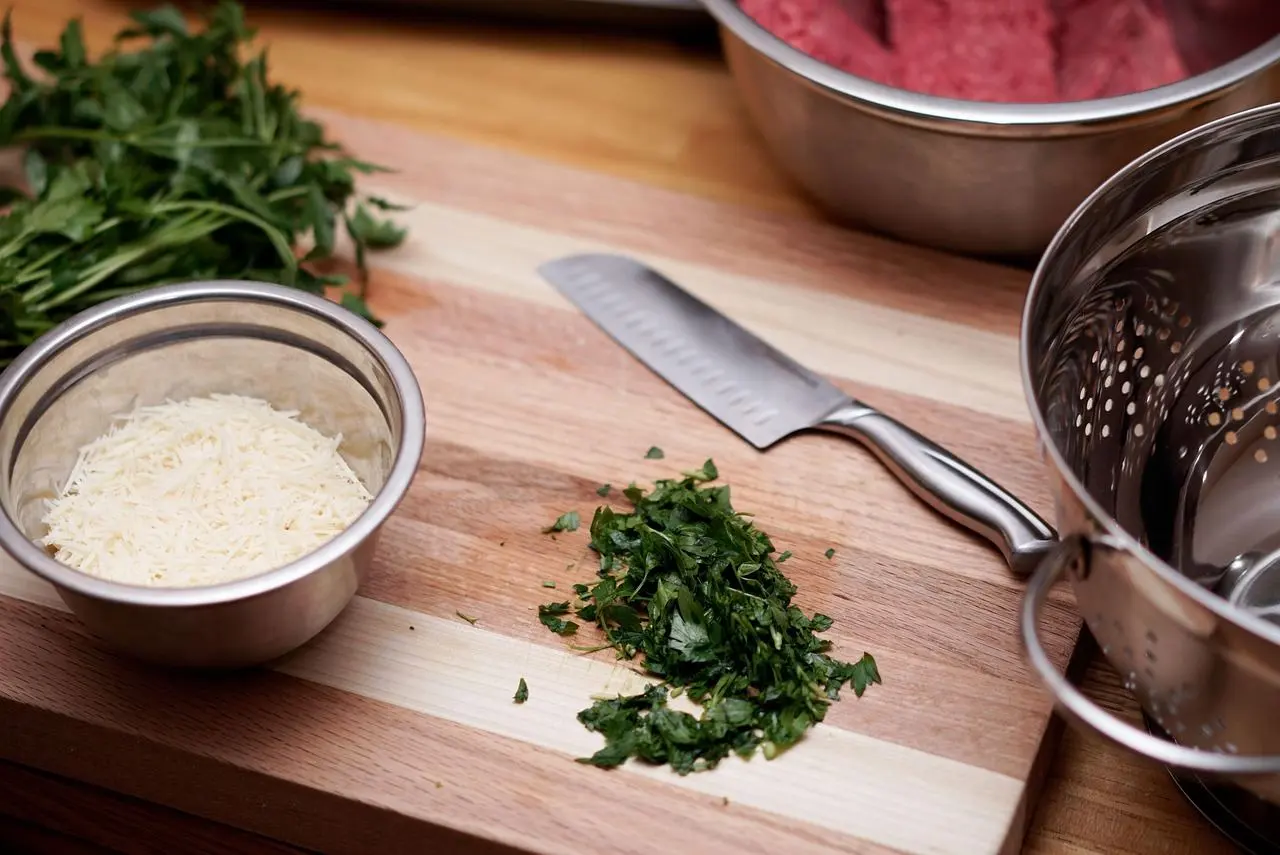
For baking, the University of Maine Cooperative Extension list, which it credits to Penn State Extension, adds a baking dish and two baking sheets, one large and one small.
Knives and cutting boards
A good knife cuts more safely as well as more quickly, according to the American Heart Association, which lists these sizes:
- Chef’s knife: 8 or 10-inch
- Paring knife: 4 or 6-inch
- Serrated knife: 8-inch, good for bread and tomatoes
The Academy gives almost the same shortlist, allows a Santoku in place of a chef’s knife, and says not to forget a sharpener. A vegetable peeler is a cheap extra that speeds up prep.
On boards, the two sources differ slightly. The American Heart Association says to buy two, one plastic for raw meat and one wooden for bread, fruit and vegetables, while the University of Maine Cooperative Extension recommends 3 different cutting boards to avoid cross-contamination. Either way, the habit that matters is keeping raw meat separate from everything else.
Utensils, measuring tools and bowls
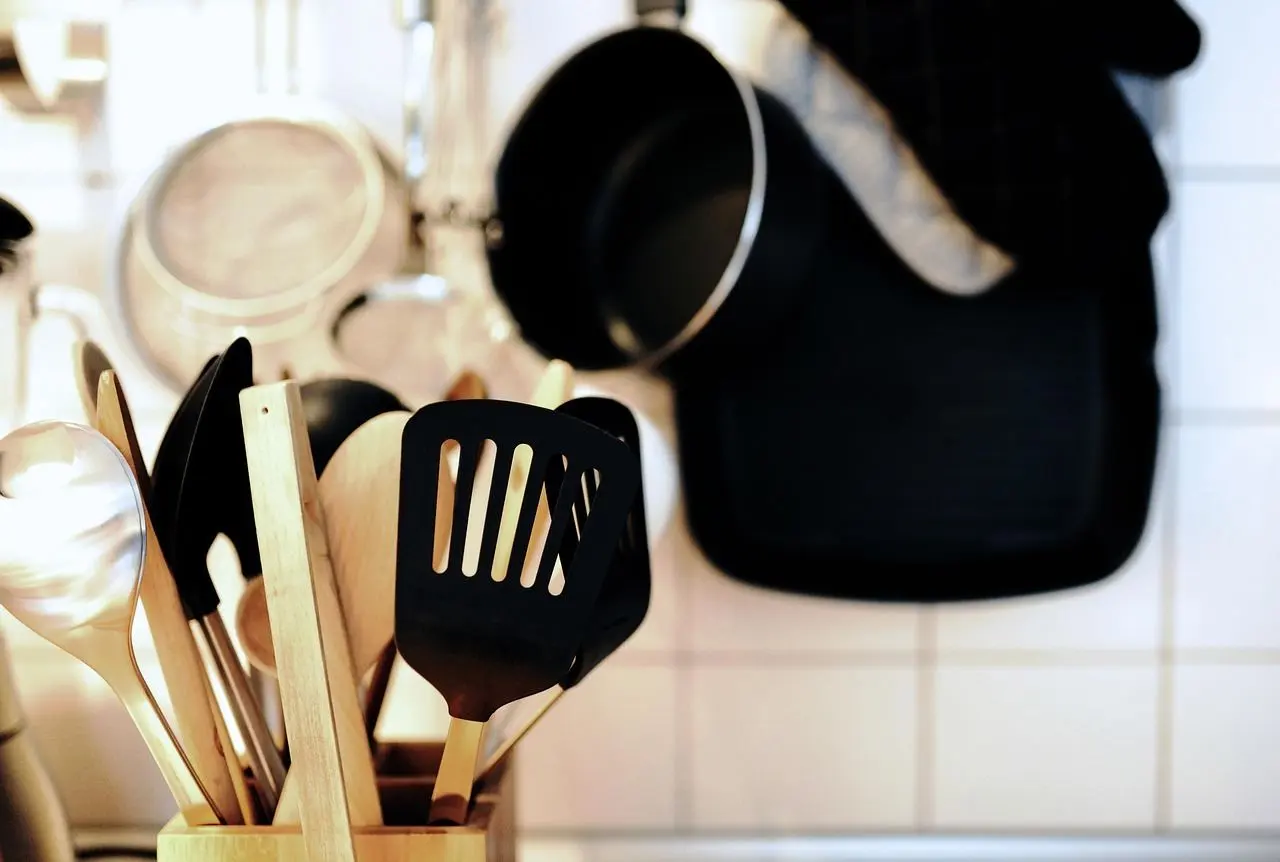
Utensils are where beginners can spend least and gain most. Most of this list is inexpensive, and the Academy of Nutrition and Dietetics covers the core pieces:
- Wooden spoons: they don’t transfer heat, won’t scratch pans and cost little.
- Whisks: a small one for vinaigrettes and dressings, a large one for beating eggs and aerating flour.
- Heat-resistant spatula: any spatula can clean a bowl, but not every one suits a hot pan.
- Long tongs: they keep your hands away from heat when you turn food or reach into an oven.
- Strainer: for draining pasta, washing produce and rinsing beans or lentils.
- Grater: for cheese, garlic, ginger or citrus zest.
The American Heart Association would also have you pick nesting mixing bowls in at least three sizes, plus kitchen shears for trimming fat or green beans. Its advice on tongs is to choose a spring-loaded pair.
Measuring deserves a little care. Because liquids measure differently from solids such as flour, the Academy suggests keeping both dry and liquid measuring cups, with a clear liquid cup so you can see the lines. Glass handles heat without warping. If a recipe uses units you don’t own, our cooking measurement conversion chart helps you convert them.
Tools that keep your food safe
The most overlooked item on the University of Maine Cooperative Extension list is an instant-read thermometer. It takes the guesswork out of doneness and confirms that meats and casseroles reach a safe internal temperature that destroys the microorganisms behind foodborne illness.
The same page points to four steps for a safe kitchen: clean, separate, cook and chill. Your tools support each one:
- Clean: wash boards and utensils that touched raw meat before you use them again.
- Separate: keep dedicated boards for raw meat and for produce.
- Cook: check temperatures with a thermometer rather than by eye.
- Chill: store leftovers promptly in containers you can stack.
Our guide on how long does food last in the fridge covers what happens once the cooking is done.
What can you skip, and where can you buy cheaply?
Skip anything with one job. The dietitian quoted by Healthline names an egg slicer, apple peeler, banana slicer and cherry pitter as examples of single-purpose gadgets not worth the money. Her short list of true essentials is wooden spoons, silicone spatulas, a whisk, kitchen scissors and a meat thermometer.
You also don’t have to buy everything new. The University of Maine Cooperative Extension suggests asking family and friends for spare household items, and checking thrift stores and yard sales.
Frequently asked questions
Which pan should I buy first?
Show answer
Start with the pan that matches what you cook most often. A large nonstick skillet suits sautéing, while a small saucepan handles grains and sauces. Add the rest as recipes demand them.
Do I need a timer if my stove already has one?
Show answer
A portable timer helps when you juggle several dishes or step out of the room, according to the American Heart Association. A single stove timer can only count one thing at a time.
Are wooden, bamboo or plastic cutting boards better?
Show answer
The Academy of Nutrition and Dietetics says material matters less than keeping boards clean and dry. Choose what fits your budget and wash it well.
Why use a whisk instead of a fork?
Show answer
The Academy notes that a fork won’t work enough air into many mixtures, so a whisk does the job better for eggs, dressings and flour.